Average Price: $410,430.31|Median Price: $343,800
Highest Price: $7,500,000|Lowest Price: $145,000
Total Listings: 1963|Average DOM: 53.12
Average Price/ft²: $431.96|Median Price/ft²: $397.25

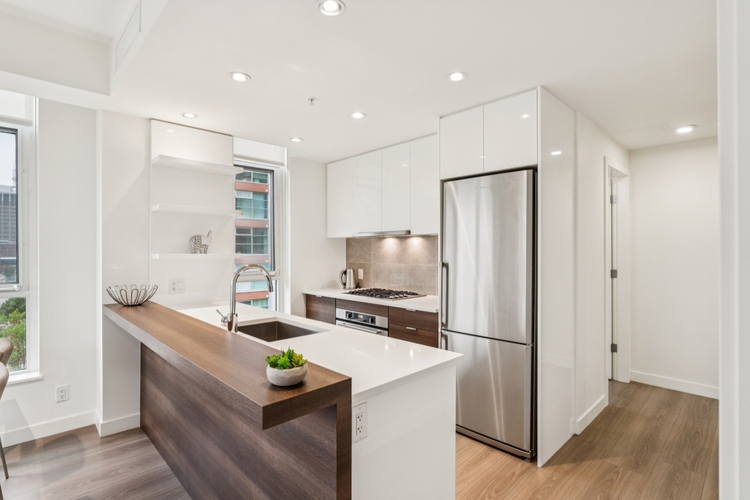
Calgary’s conventional condominium market offers diverse options, from concrete high-rises in the City Centre to suburban low-rise communities. In Alberta, a conventional condo means you own the interior space of your unit—whether in a high-rise apartment or a row-style townhouse—while sharing ownership of the land and common building elements with other residents.
If you are searching for Calgary condos for sale near transit, looking for a low-maintenance lifestyle, or exploring investment opportunities, understanding this specific ownership type is key. Below, you can explore the latest MLS® listings paired with district insights and building-specific data to help you shortlist with confidence.
Data sourced from the Pillar 9™ MLS® System. Data is deemed reliable but not guaranteed.
Average Price: $410,430.31|Median Price: $343,800
Highest Price: $7,500,000|Lowest Price: $145,000
Total Listings: 1963|Average DOM: 53.12
Average Price/ft²: $431.96|Median Price/ft²: $397.25
The demand for conventional condos in Calgary remains resilient, driven by the city's relative affordability and steady population growth. Unlike "Bareland" condominiums (often row homes or detached homes), conventional condos are currently seeing unique price adjustments, making them an attractive entry point for first-time buyers.
The charts below illustrate the multi-year price movement for the Calgary condo market. Use this data to contextualize current price levels relative to historical norms and determine if now is the right time for your move.
This gives you an immediate sense of momentum and helps you identify whether now is a favourable entry point based on your goals.
Below are the key paths buyers use when exploring the market. These options let you navigate Calgary condos from different strategic angles: building type, price band, and district.
Price-based exploration allows you to quickly understand what is achievable in different bands and districts.
Calgary’s conventional condo inventory is not evenly distributed across the city. The strongest selection sits within City Centre, but there are notable options in suburban pockets across all districts.
Explore conventional condos by CREB district:
See all current conventional condo listings in Calgary. Filter by price, beds or baths to find the home that fits your needs.
In Calgary, "conventional condominium" describes an ownership structure—not a building style. Conventional condos include both apartment-style (high-rise/low-rise) and row-style townhouses. You own the interior space; the corporation maintains the building envelope, common areas, and shared infrastructure. Inventory distribution varies by district:
Strong mix of both formats. Near the university and Foothills hospital: concrete mid-rise apartments. In Greenwood/Greenbriar and Sage Hill: row-style townhouses with ground-oriented living. Appeals to professionals and families. Well-managed buildings hold value best here.
Primarily low-rise apartments and row-style townhouses in Harvest Hills and Panorama Hills. Aimed at first-time buyers and investors seeking affordability and highway access. Many row units have attached garages—offering home-like feel without freehold maintenance.
Steady development in both formats, driven by airport employment. Redstone and Cornerstone have many row-style townhouses targeting families and investors. Apartment-style mid-rises with rental-oriented units also common. Building quality varies—scrutinize reserve funds closely.
Mix of established and new infill. Apartment-style low-rises in West Springs; row-style townhouses in Cougar Ridge and Discovery Ridge. Appeals to downsizers and move-up buyers seeking quieter surroundings near schools and shopping.
Largest and most diverse inventory, dominated by apartment-style high-rises and low-rises—concrete towers with amenities, heritage conversions, wood-frame infill. Row-style conventional condos are rare (some in Sunnyside and Inglewood). Walkability and transit drive demand. Concrete offers better soundproofing; wood-frame offers more space per dollar.
Smaller but growing presence in both formats, concentrated along major corridors. Row-style units appeal to value-focused buyers. Some complexes have governance challenges—document review is critical.
Steady supply along Macleod Trail and near LRT. Legacy and Silverado have many row-style townhouses with attached garages for families and downsizers. Apartment-style low-rises aimed at commuters. Age-restricted complexes also appear here.
Most active area for new conventional condo development, especially row-style townhouses. Seton, McKenzie Towne, and Cranston have numerous complexes with modern layouts, attached garages, and family-oriented amenities. Apartment-style units appear in mixed-use developments. Newer complexes have shorter operating histories—model potential fee increases as buildings age.
Calgary conventional condominiums—whether apartment-style high-rises or row-style townhouses—operate under a different ownership model than freehold homes or bareland condos. In a conventional condo, you typically own the interior space "paint-to-paint," while the condominium corporation owns and maintains the building structure, common areas, and land.
Two conventional condos can carry very different responsibilities and costs depending on the building's age, construction, and management. A downtown high-rise and a suburban townhouse may both be conventional condos, but what your fees cover and what you're responsible for maintaining can vary significantly. The condo plan and bylaws define exactly what you own, what the corporation maintains, and how expenses are shared.
In Calgary, "Condo" describes a legal relationship, not a building style. Understanding the difference between these three ownership types can save you thousands in maintenance and fees.
Ownership: The interior unit space.
Style: High-rise and low-rise apartments, as well as Row homes.
Maintenance: The condo corporation manages everything outside your "paint-to-paint" boundaries.
You are currently viewing Conventional listings.
Ownership: The unit AND the land it sits on.
Style: Detached homes, Semi-Detached homes and Row homes.
Maintenance: Owners typically handle their own exterior/roof; fees cover shared roads and parks.
Explore Bareland Condos →Ownership: Full title to home and land.
Style: Traditional Detached, Semi-Detached and Row homes.
Maintenance: No condo fees and no condo board. You are 100% responsible for all maintenance.
Explore Freehold Homes →For apartment-style conventional condos, concrete construction offers superior sound attenuation between units, better fire separation, and longer-term durability—but typically comes with higher fees. Wood-frame buildings often cost less upfront and can offer more square footage for the dollar, but may have higher insurance costs and different long-term maintenance timelines. For row-style conventional condos, construction type affects exterior envelope longevity and fire separation between units. Neither is inherently "better"—the right choice depends on your sensitivity to noise, your time horizon, and how you weigh immediate costs against long-term predictability.
Compare fees to similar complexes in the same district—apartment-style vs apartment-style, row-style vs row-style. Look at what's included: some buildings bundle heat, water, electricity, and amenities; others don't. More importantly, examine the reserve fund study. Low fees in a building with an underfunded reserve aren't a bargain—they're a future special assessment waiting to happen. Reasonable fees adequately fund both day-to-day operations and long-term replacements without frequent spikes.
The reserve fund study projects major repairs and replacements over 20-30 years. Look for whether the fund is adequately funded (typically 70-100% of projected needs) and whether upcoming work aligns with the building's age. For apartment-style buildings, pay attention to elevator modernization, window envelope repairs, and parkade waterproofing. For row-style complexes, focus on roof cycles, private road resurfacing, and exterior cladding timelines. A well-funded reserve means fewer special assessments.
It depends on the building's bylaws. Many conventional condos have rental caps (limiting the percentage of units that can be rented) or minimum rental periods (often 6 or 12 months). Some prohibit rentals entirely, while others allow them freely. Short-term rentals like Airbnb are restricted in most buildings. If you plan to rent now or in the future, verify the current rules and any pending bylaw changes before buying.
A special assessment is a mandatory, one-time charge to owners when the corporation faces an unexpected expense or reserve shortfall—common triggers include roof replacements, elevator repairs, or building envelope issues. To spot risk, review recent meeting minutes for discussions about major repairs, check the reserve fund study for underfunding, and look for any history of special assessments in the building. Buildings with transparent boards and healthy reserves are far less likely to surprise you.
Review the meeting minutes from the last 6-12 months—they reveal ongoing issues, board dynamics, and how proactively problems are addressed. Walk the common areas: are hallways clean, landscaping maintained, amenities in good repair? Talk to the property manager or a board member if possible. Look for consistent fee increases (not necessarily bad if tied to adequate reserve funding) versus erratic jumps. A well-managed building, whether apartment or row-style, tends to hold value better and has fewer owner surprises.
Buying: Conventional condos vary widely—from concrete high-rises to wood-frame townhouses. The building's management, reserve fund, and bylaws matter as much as the unit itself. I can help you shortlist buildings aligned with your priorities.
Selling: Positioning a conventional condo requires highlighting what matters to buyers in your building's district—walkability, amenities, or square footage. Proper framing makes a measurable difference in days on market.
Want a custom shortlist or pricing read?
Let's talk


